
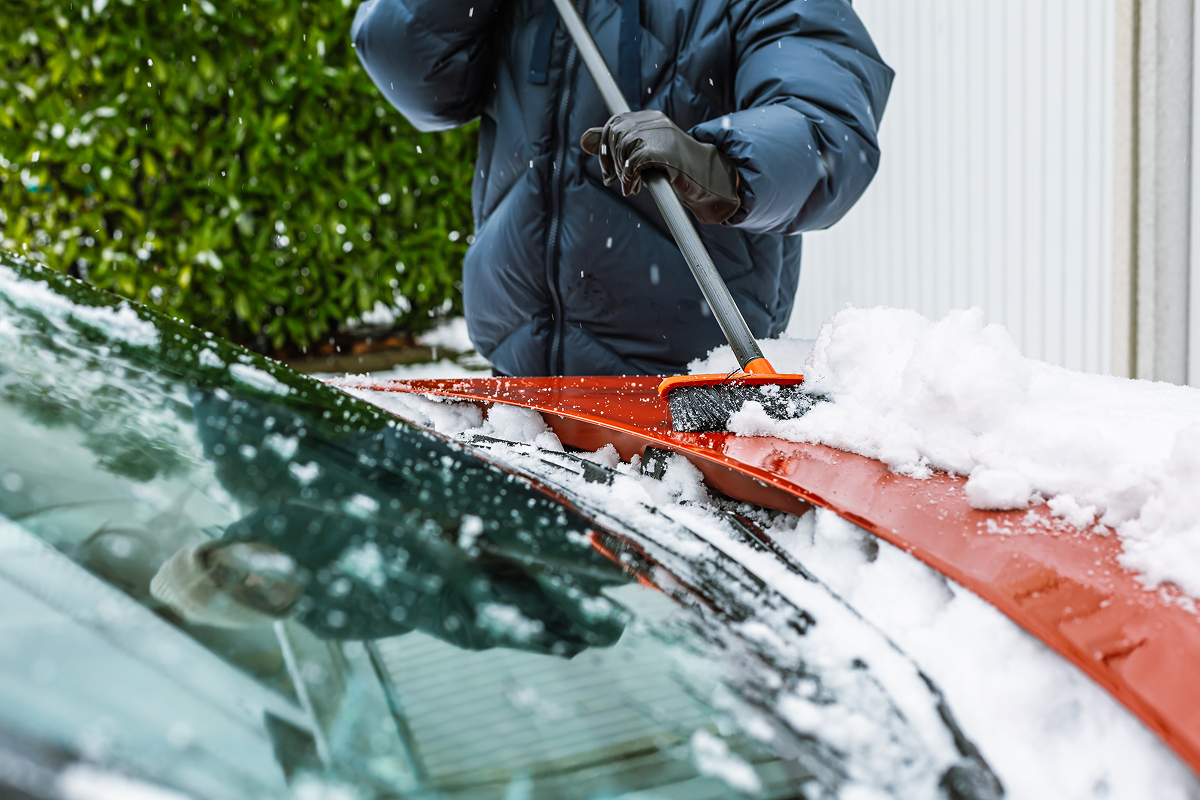
Winter in Colorado is not merely a season; for your vehicle, it is a stress test. The plummeting temperatures and precipitation of the Pikes Peak region levy a “Winter Tax” on every car and truck—a collection of specific mechanical failures triggered directly by cold, ice, and driver habits.
From the physics of frozen window regulators to the chemistry of dying batteries, this report breaks down the most common winter-induced failures. It distinguishes between simple environmental symptoms (like ice-packed wheels) and critical mechanical damage, providing a cost-benefit analysis of preventative care versus reactive repair.
The “Frozen” Tax: Wipers and Windows
One of the most expensive sounds a driver can hear on a frosty morning is the crunch of a window regulator snapping or the hum of a seized wiper motor. These failures are almost exclusively caused by user error in freezing conditions.
The $500 Mistake: Window Regulators
- The Scenario: You walk out to your car, covered in frost. You hit the window switch to roll it down. You hear a pop, followed by the sound of the glass sliding down into the door, never to return.
- The Physics: Overnight, moisture trapped in the window seals (felt runs) freezes, cementing the glass to the door frame. When you activate the switch, the electric motor applies immense torque. Since the glass cannot move, the weakest link breaks. Usually, this is the plastic clips holding the glass or the steel cables inside the Window Regulator.
- The Cost: Replacing a window regulator and motor assembly often involves removing the interior door panel and vapor barriers. Costs typically range from $400 to over $700 depending on the vehicle.
- Prevention: Never force a frozen window. Once the cabin warms up, the ice in the seals will melt, freeing the glass safely.
The Wiper Blade Gamble
- The Scenario: You turn your car on and the wipers—left on from the night before—try to swipe. They are frozen to the windshield.
- The Damage:
- Torn Rubber: The blade tears instantly, requiring replacement.
- Stripped Linkage: The motor turns, but the arms don’t. The metal splines or plastic bushings in the wiper transmission linkage strip out.
- Burned Motor: The motor stalls against the resistance, overheating its internal windings and blowing a fuse or burning out completely.
- The Fix: A wiper motor replacement can cost upwards of $300-$450. Always turn wipers off before shutting down your car, and physically lift them off the glass (or use the “service position”) before a storm.
The “Phantom” Wobble: Ice-Packed Wheels
The Symptom: You drive onto I-25 after a snowstorm. As you hit 50 MPH, the steering wheel shakes violently, and the whole car shudders. You assume you’ve bent an axle or lost a wheel weight.
The Reality: You likely have “Snow Pack.”
- The Mechanism: Driving through deep snow packs the inner barrel of your wheels with slush. When you park, this slush freezes into a solid block of ice. This ice acts like a massive, heavy wheel weight—sometimes adding 1-2 lbs of unbalanced mass to one side of the rotating assembly.
- The Diagnosis: If the shaking started immediately after driving in snow/slush and getting on the highway, it’s likely ice.
- The Solution: This is one of the few “repairs” that costs $10. Go to a car wash and spray hot water into the wheels to melt the ice. If the shaking persists after the wheels are clean, you may have actual suspension damage or a lost wheel weight, requiring a visit to Aspen Auto Clinic.
The Chemistry of “No Start”: Why Batteries Die in Winter
It is a statistical fact: batteries die in winter. But cold weather doesn’t just kill them; it exposes their weakness.
The Double Threat
- Reduced Capacity: A car battery relies on a chemical reaction to generate electrons. Cold slows this reaction down. At 32°F, a battery loses about 35% of its strength. At 0°F, it loses 60%.
- Increased Load: At the same time, your engine oil thickens (viscosity increases) in the cold, making the engine much harder to turn over.
- The Result: You have a battery with 50% less power trying to turn an engine that is 50% harder to crank. If your battery is more than 3-4 years old, it cannot bridge this gap.
Aspen Insight: We perform battery load tests that simulate a cold start. If your battery tests “Marginal” in October, it will likely be “Dead” by December. Replacing it proactively saves you the cost and danger of a tow truck.
The “Safety” Tax: Bald Tires
In summer, bald tires are a risk. In winter, they are a liability.
- The Physics: Winter tires rely on “siping”—tiny slits in the tread block that bite into ice and snow. As tires wear, these sipes disappear. A tire with 4/32” of tread may be legal, but on snow, its stopping distance can be double that of a new tire.
- The Cost of Neglect: The price of a set of tires is significantly less than the deductible for a collision caused by sliding through an intersection. Aspen Auto Clinic offers a range of winter-rated and all-weather tires suited for Colorado’s specific climate.
Aspen Auto Clinic: Your Winter Preparation Partner
Winter in Colorado is inevitable, but breakdowns don’t have to be. Aspen Auto Clinic helps you avoid the “Winter Tax” through rigorous inspection and preparation.
The Winter-Ready Evaluation
We offer specialized inspections that check the specific failure points of winter:
- Battery Load Testing: Confirming Cold Cranking Amps (CCA) meet spec.
- Coolant Freezing Point: Ensuring your engine block won’t freeze and crack overnight.
- Wiper & Washer Fluid Check: Verifying heaters and de-icing fluid levels.
- Tire Tread & Pressure Analysis.
The Aspen Guarantee
Whether it’s replacing a frozen window regulator or diagnosing a shivering suspension, we back our repairs with a 3-Year/36,000-Mile Warranty (and often a Limited Lifetime Warranty on specific parts). We keep you warm and mobile with complimentary loaner cars and shuttle services while we fix the damage winter left behind.
Don’t pay the Winter Tax. Schedule your Winter Inspection today.
