
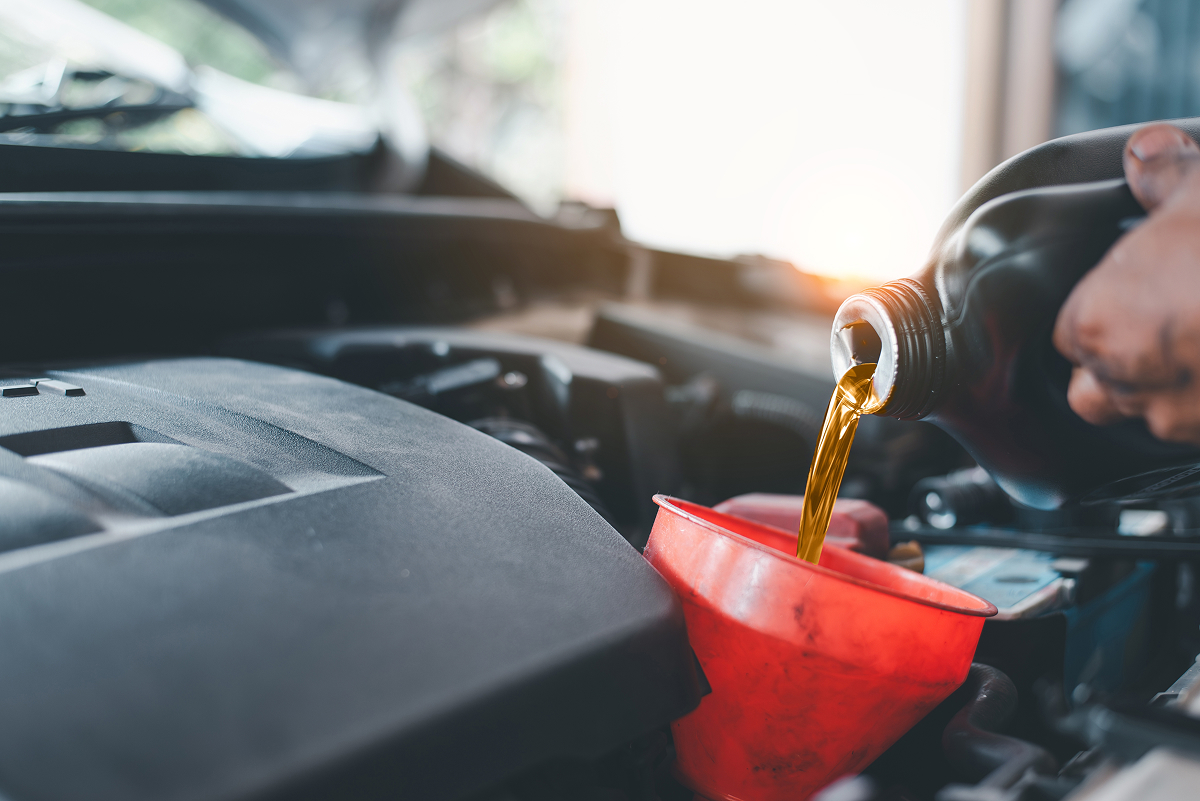
For decades, the oil change was a commoditized chore—a generic service centered on “viscosity” and “3,000 miles.” In 2026, that narrative is dangerously obsolete. The modern internal combustion engine, characterized by Gasoline Direct Injection (GDI), turbocharging, and variable valve timing, has transformed engine oil from a simple lubricant into a complex hydraulic fluid and chemical coolant.
This report dissects critical engineering shifts (API SP/GF-6 standards, LSPI mitigation) and analyzes specific “problem child” engines from Hyundai, Subaru, Ford, and GM that suffer catastrophic failures under generic maintenance.
The Paradigm Shift: It’s Not Just “Oil” Anymore
The days of grabbing any bottle of 10W-30 off the shelf are over. Modern engines are smaller, run hotter, and operate under immense cylinder pressures to meet fuel economy mandates. This has forced a chemical revolution in motor oil formulation.
The LSPI Threat and API SP / GF-6
The most critical development in the last five years is the introduction of API SP and ILSAC GF-6 standards. These were developed specifically to combat a phenomenon known as Low-Speed Pre-Ignition (LSPI).
- The Phenomenon: In small displacement, turbocharged engines (like Ford EcoBoost or Honda 1.5T), the fuel-air mixture can ignite before the spark plug fires while the piston is moving up at low speeds. This causes a collision of forces—the exploding fuel pushing down while the piston pushes up—that can shatter pistons and bend connecting rods instantly.
- The Chemistry Solution: Research discovered that calcium-based detergents (commonly used in older oil formulations to clean engines) were actually promoting LSPI.
- The New Formula: Modern API SP oils have re-engineered additive packages. They reduce calcium and replace it with magnesium-based detergents, which do not trigger pre-ignition. Using an older API SN oil in a modern GDI turbo engine is rolling the dice with catastrophic engine failure.
Soot and the Timing Chain “Stretch”
Modern GDI engines produce microscopic soot particles, similar to diesel engines. These abrasive particles escape past the piston rings and accumulate in the oil.
- The Mechanism: This soot works its way into the tiny pins and links of the timing chain. It acts like a grinding paste, wearing down the metal. This wear elongates the chain (often called “stretch,” though the metal doesn’t physically stretch).
- The Consequence: As the chain lengthens, the engine’s valve timing drifts out of sync. This triggers Check Engine Lights (P0016 codes) and, in severe cases, can cause the chain to jump teeth, destroying the engine.
- The Fix: The ILSAC GF-6 standard introduced the Sequence X Engine Test, specifically designed to measure an oil’s ability to suspend soot and prevent timing chain wear. Generic bulk oils often fail this test.
Manufacturer “Proclivities”: The High-Risk Engines
Certain engines have inherent design traits that make them intolerant of neglected maintenance or low-quality oil. Aspen Auto Clinic sees these specific failures regularly in the Colorado Springs and Centennial areas.
The Oil Burners: Hyundai & Kia (Theta II)
- The Engines: 2.4L GDI and 2.0L Turbo (found in Sonata, Optima, Santa Fe, Sorento).
- The Pathology: These engines are notorious for seizing due to connecting rod bearing failure. However, a secondary epidemic is massive oil consumption caused by low-tension piston rings getting clogged with carbon.
- The Risk: Owners often rely on the dashboard oil light, which only illuminates when pressure is lost—by which point the engine is often already destroyed. These engines can burn 1 quart every 1,000 miles, running dry well before the standard 7,500-mile interval.
- Maintenance Mandate: Strict 3,750–5,000 mile intervals are the only defense to keep ring lands clean and oil levels safe.
The Boxer’s Thirst: Subaru (FB20/FB25)
- The Engines: 2.0L and 2.5L non-turbo (Forester, Outback, Impreza 2011–2018).
- The Pathology: Subaru used low-friction piston rings to improve MPG. In the “FB” series engines, these rings can allow oil to slip past into the combustion chamber. This is exacerbated by 0W-20 viscosity oil, which is extremely thin.
- The Consequence: Catalytic converter failure (P0420) from burning oil and unexpectedly low oil levels.
- Aspen Insight: High-quality synthetic oils with lower NOACK volatility (evaporation rates) are crucial for these boxer engines to minimize consumption.
The Rattle of Death: Ford (3.5L EcoBoost)
- The Engines: F-150, Expedition, Navigator.
- The Pathology: These engines use oil pressure to actuate the Cam Phasers (variable valve timing sprockets). Dirty or low-viscosity oil fails to lock the phasers in place during startup.
- The Symptom: A loud “diesel-like” rattle for 2-5 seconds on cold start. This physically batters the internal locking pins until they shear off.
- The Cost: Replacing cam phasers is a major engine-out or cab-off procedure costing $3,000+. Frequent oil changes keep the phasers clean and lubricated, delaying or preventing this failure.
The Chain Eater: GM (2.4L Ecotec)
- The Engines: Chevy Equinox, GMC Terrain.
- The Pathology: This engine is heavily reliant on oil pressure to tension the timing chain. When oil levels drop (due to the consumption issues common in this engine) or sludge blocks the tensioner oil port, the chain goes slack.
- The Result: The loose chain whips around, breaking plastic guides and eventually skipping time, bending valves.
The Psychology of Neglect: Why “Normal” is Severe
Why do vehicle owners ignore these risks? The primary culprit is the disconnect between the “Normal” service schedule in the owner’s manual and the reality of driving.
The “Normal” Myth vs. Colorado Reality
Manufacturers publish “Normal” intervals (often 10,000 miles) to lower the advertised “Cost of Ownership.” However, almost no driver in Colorado qualifies for “Normal” driving.
- Severe Service Definition:
- Stop-and-go traffic.
- Short trips (under 5 miles) where the engine doesn’t reach operating temperature.
- Towing or heavy loads.
- Mountainous terrain and high altitude.
- The Colorado Factor: Driving up to Woodland Park or tackling Monument Hill places massive thermal stress on the oil. Furthermore, the thinner air at 6,000+ feet reduces cooling efficiency, causing oil temperatures to spike.
- Verdict: Virtually every car in the Pikes Peak region is a “Severe Service” vehicle, requiring oil changes at 3,750 to 5,000 miles, not 10,000.
The Financial Calculus of Neglect
Drivers often skip a $100 oil change to save money, unaware of the exponential cost curve of repairs.
- The Math:
- Maintenance: 3 extra oil changes per year = ~$300.
- The Cost of Neglect: A replacement engine for a Hyundai Theta II or Ford EcoBoost now costs between $6,000 and $10,000 due to parts inflation and labor shortages.
- Economic Reality: Neglecting oil maintenance is borrowing money from your future self at a 2,000% interest rate.
The Aspen Difference: Precision Lubrication
At Aspen Auto Clinic, we reject the “quick lube” model. We treat an oil change as a diagnostic health check and a chemical renewal for your engine.
Chemistry Over Commodity
We don’t use bulk sludge. We utilize premium fluids like Liqui Moly and BG Products, which are engineered to meet strict European and GDI specifications.
- Liqui Moly: Especially for our European customers (Audi, BMW, VW), Liqui Moly carries the specific manufacturer approvals (e.g., VW 504.00/507.00) that generic synthetics lack. These oils have high shear stability to protect turbos and cam followers.
- BG MOA/EPR: We utilize BG’s advanced chemistry to clean piston rings (EPR) and fortify the new oil against oxidation (MOA), specifically targeting the soot and carbon issues prevalent in GDI engines.
The Digital Health Check
Every service includes a Digital Vehicle Inspection (DVI). We don’t just tell you your oil is dirty; we check for the early warning signs of the “proclivities” mentioned above:
- Checking for timing cover leaks on Macans and Cayennes.
- Listening for cold-start rattles on F-150s.
- Monitoring oil consumption history on Subarus.
